
What Is a Linear Stepper Motor? Applications and Selection Guide
2026-09-21
Learn how linear stepper motors convert rotary motion into linear movement and where screw stepper motors can be used in automation systems.
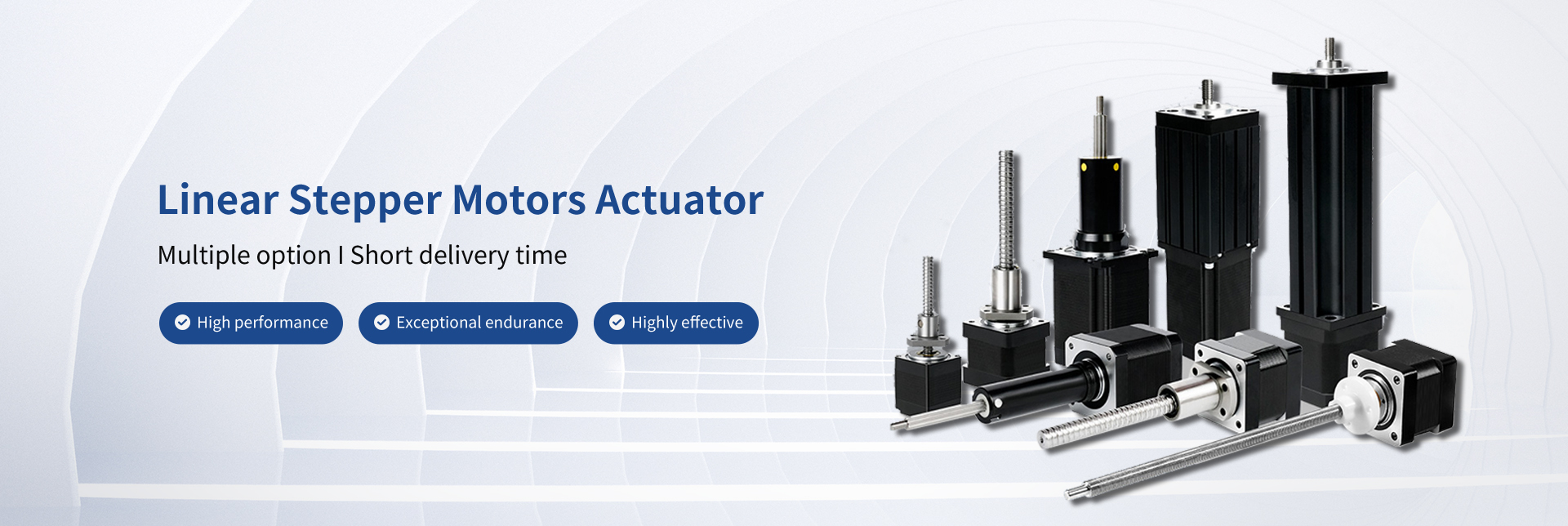
Linear motion is required in many automated machines.
Traditional systems may use a rotary motor together with a separate transmission mechanism to create linear movement.
A screw stepper motor integrates the motor with a screw mechanism to provide a compact linear motion solution.
How Does a Screw Stepper Motor Work?
A stepper motor generates rotary motion.
The screw mechanism converts this rotary movement into linear movement.
Depending on the mechanical configuration, the motor can drive a nut or screw to move a mechanical component along a linear axis.
This design can simplify certain linear positioning systems.
Advantages
Screw stepper motors can provide:
Compact linear motion
Direct mechanical transmission
Precise positioning
Simple system architecture
Easy integration into automation equipment
Typical Applications
Linear stepper motors can be considered for:
Linear positioning systems
Laboratory equipment
Medical equipment
Packaging machinery
Inspection systems
Semiconductor equipment
Small automation machines
Precision machinery
How to Select a Linear Stepper Motor
Engineers should consider:
Stroke: How far does the mechanism need to move?
Speed: How quickly must the linear axis move?
Load: What mass must the system move?
Accuracy: What positioning performance is required?
Screw configuration: What screw type and mechanical structure are appropriate?
Installation: How much space is available?
SAMSR MOTOR provides screw stepper motors and other linear motion products for different automation applications.