
Stepper Motor vs Servo Motor: How to Choose the Right Motor for Automation
2026-08-20
Stepper motors and servo motors have different characteristics. Learn how to compare them based on speed, torque, positioning, feedback and application requirements.
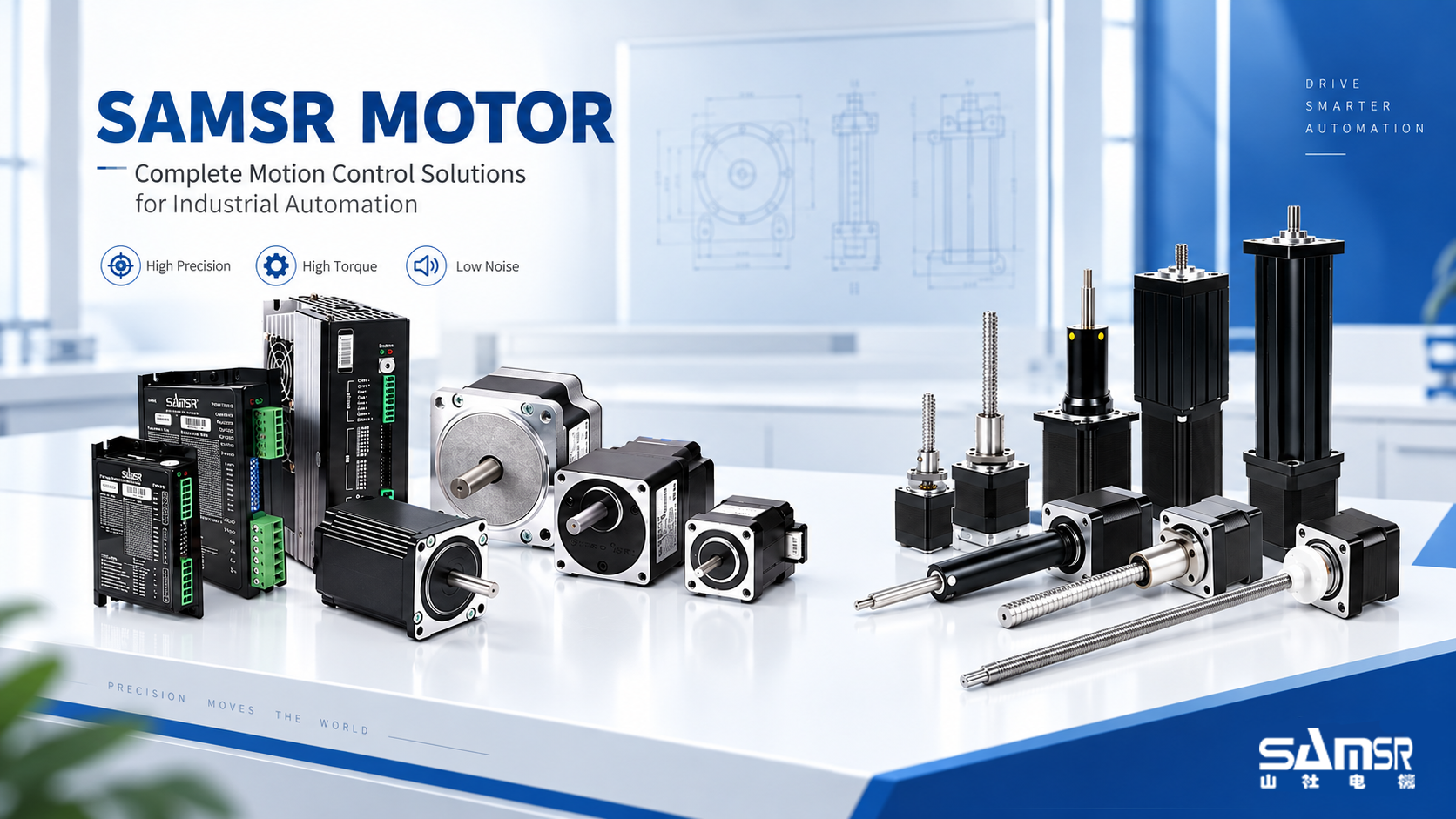
Choosing between a stepper motor and a servo motor is an important decision when designing an automated machine.
Both technologies can provide precise motion control, but they are designed for different application requirements.
What Is a Stepper Motor?
A stepper motor moves in discrete steps according to electrical command signals.
Stepper motors are widely used in positioning applications because they can provide controlled movement without requiring a complex feedback system in traditional open-loop configurations.
Typical applications include:
3D printers
CNC equipment
Packaging machinery
Linear positioning systems
Laboratory equipment
Automation machinery
What Is a Servo Motor?
A servo motor normally works with a feedback system.
The controller can monitor motor position and adjust motor operation according to the required position, speed or torque.
Servo systems are commonly considered for applications requiring high speed, dynamic response and precise motion control.
Key Differences
| Feature | Stepper Motor | Servo Motor |
|---|---|---|
| Feedback | Optional | Commonly used |
| Control | Step-based | Closed-loop control |
| Speed | Suitable for many positioning applications | Suitable for high-speed applications |
| Cost | Often more economical | Generally higher system cost |
| Application | Positioning and automation | High-performance motion control |
There is no universal answer for every machine.
Engineers should consider load, speed, acceleration, positioning accuracy, duty cycle and budget before selecting a motor.
SAMSR MOTOR provides both stepper and servo motor solutions for different industrial automation requirements.